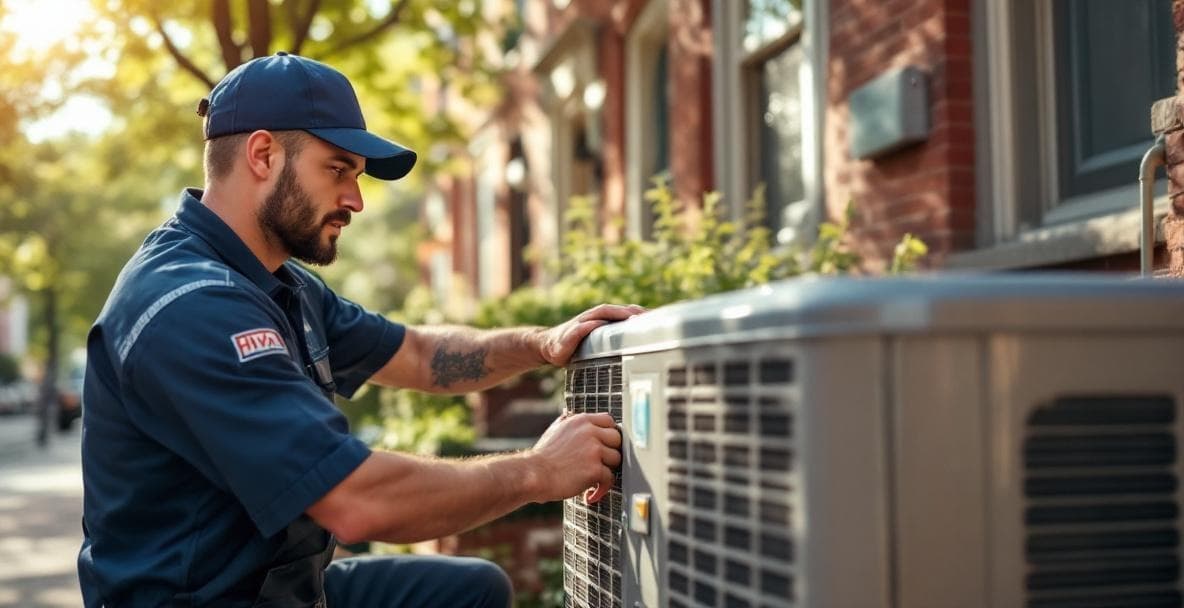
HVAC Advertising in Wilmington, DE: A Tactical Growth Guide for Local Contractors
Wilmington's HVAC market isn't waiting for you to figure out your ad strategy. Between a compressed cooling season, aging rowhouse stock across half the city, and a steady stream of downtown commercial work, the contractors who move first in any given quarter tend to lock up the jobs everyone else chases in July. This guide is built around Wilmington's actual neighborhoods, climate, and regulatory environment — not generic HVAC marketing advice you've already read. Work through it section by section and you'll have a concrete advertising plan before the next seasonal window opens.
Why Wilmington's HVAC Market Rewards Early Movers
Wilmington's peak cooling window runs June through September, with temperatures pushing 85–90°F and humidity sitting between 65–75%. That stretch is when homeowners stop tolerating a marginal system and pull the trigger on replacement. Owners who aren't visible in May — on Google, in the mailbox, on Facebook — lose those jobs permanently. There's no catching up mid-July when dispatch queues are full.
The housing stock amplifies the opportunity. Historic rowhouses along the Brandywine, Eastlake, and Delaware Avenue corridor are running systems and ductwork that are decades old. This isn't a market where you're trying to create demand — the equipment is failing on its own schedule. Your advertising just needs to make sure you're the call that gets made.
Downtown revitalization along Rodney Square and the DuPont Company headquarters area has also opened a parallel B2B lane. Light commercial retrofits, property management contracts, and multi-unit service agreements are available to shops willing to position for them — most residential-only operators are leaving that revenue on the table.
Delaware's licensing barrier is a real competitive moat. State-issued contractor licenses require documented apprenticeship and journeyman hours, which means fly-by-night operators can't legally compete on the same jobs you're running. That credential is worth naming in your ads. "State-Licensed Delaware HVAC Contractor" signals compliance and filters out the bargain shoppers who'll call an unlicensed crew anyway.
For contractors serving eastern portions of New Castle County and waterfront areas closer to the Delaware Bay, salt-air corrosion is a specific local risk that shortens outdoor condenser life. Most competitors aren't naming this in their ads — advertising a "coastal corrosion inspection" or "salt-air maintenance package" speaks directly to a problem those homeowners already sense but haven't been given language for.
One note on pricing: Wilmington's median household income is approximately $55,000–$60,000 (per recent ACS estimates), and a significant portion of the housing stock turns over frequently through rentals. Price sensitivity is real. Financing offers and payment plan messaging aren't just nice-to-have — they're often what converts a qualified prospect into a booked job.
Map Your Neighborhood Targets Before You Spend a Dollar
Not all of Wilmington produces the same job value, and not all neighborhoods respond to the same ad format. Spend ten minutes segmenting before you touch your ad budget.
Brandywine and Pike Creek have higher owner-occupancy rates, larger lot sizes, and more centrally ducted systems. These are your best neighborhoods for full system replacement campaigns and annual maintenance agreement offers. Homeowners here have longer tenure and are worth the extra effort to acquire.
Riverside and Eastlake are denser rowhouse markets with aging equipment. Expect higher volume of smaller repair and ductwork jobs. Direct mail, door hangers, and Nextdoor ads perform well here because the neighborhoods are compact enough that a single drop reaches a meaningful density of prospects.
Trolley Square is a mixed rental and owner-occupied corridor where property managers — not tenants — control the service call. Consumer-facing ads are largely wasted here. B2B outreach, a dedicated landing page for property managers, and direct LinkedIn or email contact with management companies will produce better results. One commercial maintenance contract with a Trolley Square property manager can be worth the equivalent of 15 residential tune-ups.
Southern New Castle County, including Middletown, is newer construction, which means systems aren't failing yet — but they're aging. Get in front of those homeowners now with preventive maintenance agreement offers before they're shopping for emergency service with three other contractors. Note that Middletown sits roughly 20 miles south of Wilmington proper; contractors targeting this area are expanding their geographic footprint into a distinct and growing community rather than Wilmington's immediate suburbs.
Use Google Ads geographic radius and zip-code targeting to weight budget toward the neighborhoods producing your highest average ticket. Don't spray the entire 302 area code evenly. Pull your own invoice data: which zip codes produced your highest-value jobs last summer? Double your digital presence there before June. The answer is usually sitting in your accounting software and takes 20 minutes to run.
Build a Seasonal Ad Calendar Around Wilmington's Weather Peaks
Wilmington's climate gives you a clear advertising rhythm. Operators who follow it consistently outperform those who run campaigns reactively.
March–April is your setup window. Launch cooling-season campaigns before temperatures climb. Industry data suggests Google search volume for terms like "AC tune-up Wilmington" rises 40–60% by Memorial Day. You need to be indexed, funded, and generating impressions before that spike — not responding to it.
June–September is the revenue quarter. Maximum ad spend on emergency repair, AC replacement, and financing offers. This is not the time to pull back. Every dollar you cut in July is a job you're sending to a competitor.
October–November is the heating pivot. Freeze-thaw cycles beginning in late November create condensation and ice-dam risk in attic-mounted equipment. Use that specific risk in your copy: "Is your attic-mounted system ready for Delaware's freeze-thaw season?" is a real question that lands differently than a generic heating tune-up ad.
December–February brings lower volume but higher urgency. Emergency heat calls convert fast and at high ticket values. Keep a lean always-on budget running and make sure your Google Business Profile clearly shows 24/7 emergency availability. A homeowner with no heat at 11 PM on a 22-degree night in Wilmington isn't comparison shopping — they're calling whoever answers.
Year-round, Wilmington's 65–75% humidity is a standing indoor air quality problem. Dehumidification, air filtration, and IAQ upsell messaging doesn't need to be seasonal. Build a standing campaign around it and run it continuously as a secondary message alongside your primary seasonal push.
One process note: refresh your creative at each seasonal pivot. Running July creative in October tells prospects you're not paying attention. It's a small signal, but in a word-of-mouth market like Wilmington, perception of attentiveness matters.
Own Google Local Services Ads and Your GBP Before Anything Else
If you haven't claimed and optimized your Google Business Profile and applied for Local Services Ads verification, do those two things before you spend another dollar anywhere else. Nothing else in your ad budget gets in front of a prospect at a higher moment of purchase intent.
Google Local Services Ads appear above all paid search results for "HVAC near me" queries. Wilmington contractors without LSA verification are invisible at precisely the moment a homeowner has already decided to buy. The "Google Guaranteed" badge that comes with LSA verification requires a background check and license verification — Delaware's state contractor license satisfies the credential requirement. The application process takes time, so start it now if you haven't.
For your Google Business Profile, confirm that your service area covers all target zip codes in the 19801–19810 range and that every relevant service category is listed. Post seasonal offers as GBP updates — these show up in search results and on your profile, and most competitors aren't using them consistently.
Review velocity is a ranking factor and a conversion factor. Contractors with 50+ reviews at 4.5 stars or better tend to dominate the Local Pack in competitive markets. Build a post-job SMS review request into every technician's close-out routine — not a manual follow-up, an automated text sent within an hour of job completion. The request rate drops significantly once the customer has moved on with their day.
Photo quality on your GBP correlates with click-through rate. Post real job photos from Wilmington locations — a condenser install beside a historic brick rowhouse in Brandywine is more credible than a stock photo of a generic unit in a suburban backyard. Authenticity signals local presence.
Respond to every negative review within 24 hours. Wilmington is a smaller city than it might seem on a map, and your public response to a complaint is read by future customers, not just the reviewer. A professional, solution-oriented reply to a one-star review often converts observers into callers.
Do a quick audit right now: search "HVAC repair Wilmington DE" and screenshot who holds the top three Local Pack positions. That is your real competitive set — not the names you already know from industry circles.
What You Lose When Your Ads Ignore Delaware's Compliance Reality
Delaware's regulatory environment is specific enough that compliance messaging functions as a genuine differentiator — not just legal housekeeping.
Delaware requires state-issued HVAC contractor licenses with documented apprenticeship and journeyman hours. Any ad that doesn't surface your license number is leaving a trust signal on the table. Prospects who've been burned by unlicensed operators — and Wilmington has its share of that experience — actively look for this signal. Don't make them dig for it.
DNREC (Delaware's Department of Natural Resources and Environmental Control) enforces refrigerant handling rules, and EPA Section 608 certification is mandatory for anyone working with refrigerants. "EPA 608 Certified" in your ad creative addresses a real concern for homeowners who've heard stories about cut-rate operators venting refrigerant illegally. It's three words that close an objection before the first call.
Wilmington residential permits require city inspection. Not pulling permits is a liability your competitors may be accepting — advertising that you pull permits and handle the inspection process is a specific, verifiable differentiator. For commercial work, note that DNREC air quality reviews may apply. Property managers in Trolley Square and the downtown district want contractors who won't create compliance headaches for them. Put "Licensed & DNREC Compliant" in your B2B-targeted headlines.
A practical caution: do not run ads promising services your license doesn't cover. Delaware enforcement actions are public record and can surface in a reputation search. The upside of a job you're not qualified to pull is not worth the downside of that exposure.
Budget Allocation: Where Wilmington HVAC Dollars Actually Go
For a solo operator or small crew, a $2,000–$3,500 per month total ad budget is a functional Wilmington baseline based on current market conditions (figures reflect typical costs at time of writing and should be verified against your own CPC data). Below $1,500 per month, Google Ads alone typically won't generate consistent lead volume — the competition for "HVAC Wilmington" terms is real and the minimum viable daily budget to stay competitive in those auctions is higher than most owners expect.
A reasonable starting split — not a rule, a starting point:
- 50% Google LSA + paid search
- 25% Meta/Facebook neighborhood targeting
- 15% direct mail in high-density rowhouse zip codes
- 10% reputation and review tools
Direct mail still converts in Riverside and Eastlake, where older homeowners are less likely to find you through search. A postcard mailed to 2,000 homes is a cost-effective test worth running in April — typical print-and-mail rates in this range run roughly $400–$1,000 depending on format and production, so get current quotes before budgeting. Wilmington's dense rowhouse blocks mean a single mail drop can reach 500 households in a four-block radius — the geographic concentration makes per-lead cost lower than you'd see in a suburban market with the same budget.
Van wraps are a one-time investment that generates continuous impressions in the neighborhoods where your technicians are already working. In a dense urban market like downtown Wilmington, a branded van sitting in front of a job site for three hours is a passive ad running to every person who walks or drives by. Get current quotes from local sign shops; costs vary significantly by size and complexity.
Track every lead source. Use a dedicated phone number for each channel — one for Google Ads, one for Facebook, one for direct mail — or use UTM parameters for digital. Owners who can't tell you which channel produced their last ten jobs are making budget decisions blind. This is a 30-minute setup task that pays for itself quickly.
Shift budget seasonally: increase in April and August, pull back in January. The budget you save in a slow month is worth more when deployed in a peak month where it closes at a higher rate.
Turning Local Trust Into Long-Term Maintenance Revenue
Emergency calls are profitable. Maintenance agreements are the business. The difference is whether your revenue is predictable or chaotic, and whether you're building customer relationships or competing for them repeatedly.
Wilmington gives you specific, factual reasons to sell annual maintenance agreements that your competitors in less distinctive markets can't use. For homes in eastern New Castle County near the waterfront, salt air accelerates outdoor condenser corrosion — a maintenance agreement framed as including a corrosion inspection addresses a real local risk and justifies the annual fee in terms the homeowner can verify with their own eyes. Aging housing stock with undersized or deteriorated ductwork means a first-visit tune-up frequently reveals upsell opportunities. Maintenance agreement customers give you permission to return.
Target your maintenance agreement marketing at Brandywine and Pike Creek first. Higher owner-occupancy rates mean longer customer tenure and better lifetime value. A homeowner who's been in their Pike Creek house for 12 years and signs a two-visit annual agreement is worth materially more than a succession of one-time repair calls in high-turnover rental neighborhoods.
Price agreements to include two visits — spring and fall. Wilmington's dual demand season (peak cooling June–September, peak heating December–February) makes the two-visit model easy to justify on value. You're not selling a convenience; you're selling insurance against the system failing at the worst possible moment.
The best time to sell a maintenance agreement is in October and November. A homeowner who just paid a high summer cooling bill is primed to prevent the next emergency. That's your emotional opening — not a discount, but a direct appeal to avoiding a repeat of what they just experienced.
Referral incentives for maintenance agreement holders consistently outperform general referral programs. These are your most engaged customers, they're likely in stable housing, and their neighbors are often in the same housing vintage with the same aging equipment. An offer like "Refer a neighbor and we'll credit your next service visit" is easy to explain and easy for them to act on.
Wilmington's climate gives you a clean two-sentence pitch for annual maintenance: winters cycling between 20°F and 35°F stress attic-mounted equipment with freeze-thaw condensation; summers at 85–90°F with high humidity push systems to their limits. In this specific climate, annual maintenance isn't optional — it's the cheapest service call you'll ever make.
Ad Frameworks That Work for HVAC Contractors — And Why
The examples below analyze ad structures representative of what HVAC contractors are running in competitive local markets. These are not citations of specific named campaigns but illustrative frameworks — use them as a diagnostic against your own creative to see what's missing and what's working.
The Payment Plan Anchor — Leading With Affordability
This format opens with a qualifying question ("Does your home need a new central air system?"), then immediately anchors the conversation around a low monthly payment figure before revealing the full financing terms. The move from a self-selection question to a specific number ($79/month at zero interest over 60 months, for example) collapses a large purchase decision into something that feels manageable.
What makes this work in a price-sensitive market like Wilmington is that it reframes the objection before the objection forms. A homeowner who's been postponing a $6,000 system because it feels unaffordable responds differently when the first number they see is a monthly figure. The "while it lasts" softener adds mild urgency without demanding immediate action — it's a nudge, not a pressure tactic. The free quote call-to-action at the end provides a zero-commitment next step that moves the prospect into your funnel without forcing a purchase decision at the ad stage.
What to build. If you offer financing, lead with the monthly payment before the total price. Pair it with a time-limited framing and a free inspection or quote offer. In Wilmington's rental-adjacent neighborhoods where upfront cost is a real barrier, this structure does more work than any feature-based ad.
The Urgency Frame — Starting With the Pain
This format opens by naming what customers dread most in an HVAC emergency: the wait. It positions slow, unresponsive competitors as the implicit villain before the advertiser even mentions their name, then steps in as the fast alternative. The contrast does the persuasion work without requiring an explicit comparison.
In Wilmington's compressed cooling season, this framing has a specific advantage: the fear it names is seasonal and immediate. A homeowner calling in late June after their system fails isn't conducting a measured purchase process — they're in acute discomfort and want resolution. An ad that names that discomfort accurately signals "this company understands my situation," which is the first thing a stressed buyer needs before they'll act.
The frame carries a real obligation: if you claim fast response, you have to deliver it. In a tight-knit mid-size city like Wilmington, the gap between your ad promise and your operational reality shows up fast in reviews, and your GBP is visible to every future prospect who sees those reviews.
What to build. Open with the problem state, not your credentials. In Wilmington specifically, that might be: "Don't spend an August night waiting on a callback — we answer 24/7 and dispatch the same day." Anchor the CTA to the fear: booking now removes the risk of being left waiting. Video creative reinforces the urgency and intimacy of this format more effectively than static images.
The Local Authority Directory — When It Works and When It Doesn't
This format leads with company name and local service area, lists services, and adds a generic credibility phrase ("top-notch customer service"). It functions as a directory entry — useful for warm audiences who already know the brand and just need confirmation, but ineffective for cold prospects who have no prior relationship with the business.
The core problem is that it does no persuasion work for someone encountering the ad for the first time. There's no problem statement, no emotional trigger, no reason today is different from any other day. A homeowner scrolling their feed who hasn't heard of this company will scroll right past.
What to build. If you want to list services, lead with a specific seasonal reason to act rather than the service itself. "Spring AC maintenance season is here — we handle tune-ups, duct inspection, and IAQ checks" gives the same service information but adds context and timing that creates a reason to click today rather than never. Reserve directory-style ads for remarketing campaigns targeting people who've already visited your site or called you before.
The Trust-First Frame — Tenure and Identity as Conversion Drivers
This format opens with identity credentials — veteran ownership, local operation, years in the market — before making any service claim. It answers the unspoken question every homeowner has before letting a stranger into their home: "Will this person be straight with me?"
This approach works especially well for replacement and maintenance agreement campaigns, where the customer is making a longer-term decision and wants to trust the company they're hiring. It trades conversion intensity for trust depth. A homeowner primed on this framing doesn't feel pressure to call — they feel like they've found someone trustworthy. The absence of aggressive urgency is itself a signal: established businesses don't need to pressure you.
For Wilmington specifically, the neighborhood-specificity version of this frame is particularly strong. "Serving Brandywine and Riverside since [year]" lands differently than "Trusted local HVAC" because it's verifiable and it implies market knowledge — this contractor has seen the 1970s rowhouses in Eastlake, they know the ductwork challenges in older Wilmington construction, they understand what local inspectors expect.
What to build. Lead with your most credible identity signal — local tenure, veteran status, years of Delaware licensing — in the first line. Then connect that credential directly to a customer outcome: not "we've been here 15 years" but "we've been here 15 years, which means we'll still be answering your calls when your warranty needs honoring." Pair with a behavioral proof point (average response time, permit-pull count, maintenance agreement renewals) that gives the trust claim something concrete to stand on.
FAQ
How much does HVAC advertising cost for a small contractor in Wilmington, DE?
A functional baseline for a solo operator or small crew in Wilmington is roughly $2,000–$3,500 per month in total ad spend across all channels, based on current market conditions. Below $1,500 per month, Google Ads alone tends not to generate consistent lead volume given competition levels in this market. Start there and scale up in April and August when close rates justify the higher spend. Track cost per booked job by channel from day one — that number, not cost per click, tells you where to put next month's budget.
Do I need to show my Delaware HVAC license number in my ads?
Delaware doesn't mandate that license numbers appear in ads, but including your state contractor license number is one of the highest-value trust signals you can add — especially in a market where prospects have experienced unlicensed operators. It's a small piece of copy that filters in serious buyers and filters out the callers most likely to dispute invoices.
What's the best time of year to run HVAC ads in Wilmington?
The highest-value windows are March–April (launch before the cooling surge), June–September (maximum spend on AC replacement and emergency repair), and October–November (heating pivot). December–February should run a lean always-on budget for emergency heat calls. Year-round IAQ and dehumidification campaigns layer on top of these seasonal pushes as a secondary message.
Can I run Google Local Services Ads in Delaware without a state contractor license?
No. The Google Guaranteed badge that comes with LSA verification requires license verification as part of the background check process. In Delaware, that means your state-issued HVAC contractor license needs to be active and in good standing before you can complete LSA verification. Start the application process early — it takes time to clear.
How do I get more HVAC reviews from Wilmington customers?
The most reliable method is an automated SMS sent within an hour of job completion, while the experience is still fresh. Don't rely on technicians to ask verbally — review request rates drop significantly when it's left to individual follow-through. Set up a short text with a direct link to your Google Business Profile review form and build it into your job-close workflow. Aim for 50+ reviews at 4.5 stars before you consider your GBP optimized.
Is Facebook or Google a better ad channel for Wilmington HVAC leads?
Google captures existing demand — someone searching "AC repair Wilmington" is already ready to buy. Facebook creates demand — it's better for financing offers, seasonal promotions, and maintenance agreement campaigns targeting homeowners who aren't actively searching. For most small operators in Wilmington, Google LSA and paid search should get the larger budget share (around 50%), with Facebook handling neighborhood targeting and remarketing.
What zip codes in Wilmington should I target for the highest HVAC job values?
Pull your own invoice data first — your historical numbers are more accurate than any generalization. That said, Brandywine and Pike Creek neighborhoods (zip codes in the 19803–19808 range) tend to produce higher average tickets due to owner-occupancy rates and larger centrally ducted systems. Riverside and Eastlake (closer to 19802) generate higher volume at lower average ticket. Weight your digital budget toward the zip codes your own data confirms as highest-value.
How do I market HVAC services to property managers and landlords in Wilmington?
Consumer-facing ads largely miss this audience. Property managers in Trolley Square, the Rodney Square district, and downtown revitalization zones respond better to direct B2B outreach: a dedicated landing page built for commercial clients, direct LinkedIn messaging, and in-person networking with local property management associations. Your messaging should emphasize permit compliance, DNREC regulatory knowledge, and fast response times — not financing offers designed for homeowners. One commercial contract can equal the revenue of 15 residential tune-ups, so this audience warrants a separate campaign entirely.