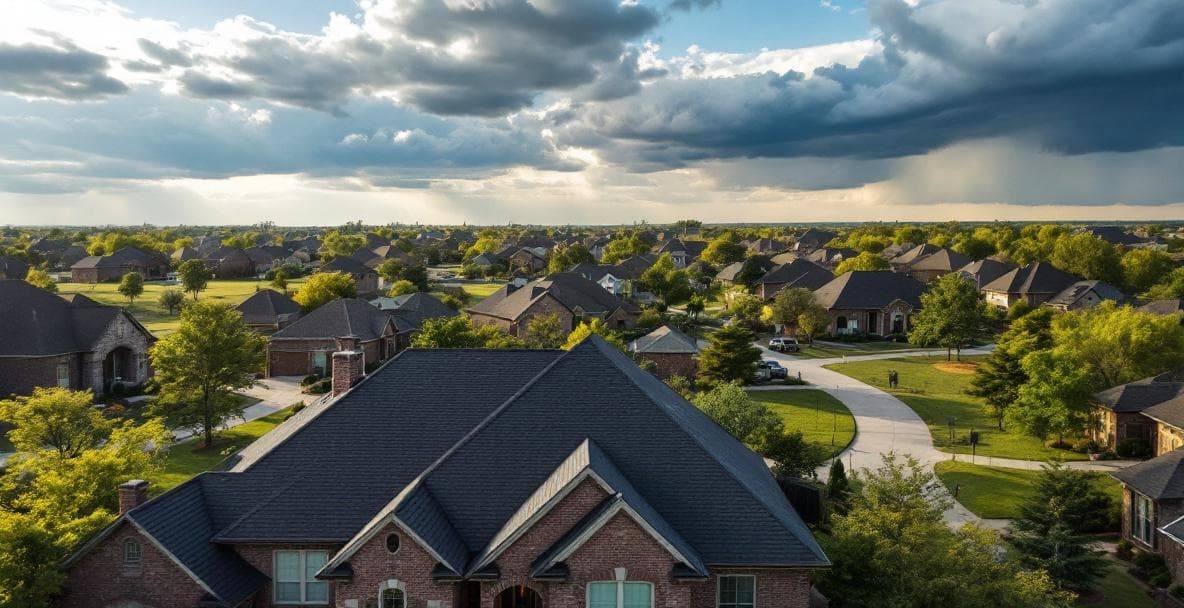
Roofing Contractor Advertising in Arlington, TX: How to Win More Jobs in One of DFW's Most Active Hail Markets
Arlington is not a forgiving market for roofers who wing their advertising. You have nearly 400,000 residents, a housing stock that spans 1970s ranch homes in Handley to brand-new construction in Viridian, and a spring storm season that compresses months of replacement demand into a few brutal weeks. The contractors who are already visible — on Google, in neighborhoods, in homeowners' inboxes — capture that surge. Everyone else pays premium CPCs to chase leads that are already gone.
This is not a guide about advertising in general. It is a playbook built for the Arlington market specifically: its climate, its regulations, its neighborhoods, and the competitive pressure of operating inside the DFW Metroplex where national roofing brands run real ad budgets. Use it as a working document, not background reading.
Why Arlington Is a High-Stakes Roofing Market Worth Your Ad Budget
Arlington sits squarely in North Texas Tornado Alley. Spring storm season runs March through June and delivers hail events that can produce golf ball-sized or larger hail — the kind that causes immediate shingle puncture and granule loss, not just cosmetic damage. In recent seasons, Arlington recorded multiple severe hail events with 1.75-inch or larger hail, each capable of triggering thousands of simultaneous insurance claims across neighborhoods like Matlock Estates and Pantego. That is not a slow drip of leads. That is a compressed window where the contractor who is already ranked and already trusted closes jobs while competitors are still turning on their campaigns.
The housing stock creates two distinct revenue streams. Aging 1970s–1990s homes in College Hills, Interlochen, and Handley are prime for full replacements — worn shingles, deteriorated underlayment, and accumulated UV damage from 100°F+ summers mean these roofs are often one storm away from a total claim. Newer master-planned construction in Viridian feeds a different kind of work: maintenance contracts, warranty inspections, and new-build relationships with builders.
The homeowner base is predominantly middle-income, and that shapes how jobs get closed. Insurance-funded replacements dominate. Contractors who understand the claim cycle — how to document damage, how to work with adjusters, how to explain the process to a homeowner who has never filed a roof claim — close faster and at higher ticket values than competitors who treat it as a standard retail sale.
The competitive pressure is real. Dozens of regional and national roofing brands operate in DFW with dedicated marketing budgets. Your edge as a local operator is depth of market knowledge they cannot replicate — neighborhood-level credibility, local registration credentials, and the ability to be on a roof in College Hills within hours of a storm instead of dispatching from three cities away.
Get Your Compliance House in Order Before You Spend a Dollar on Ads
Arlington requires a city-issued contractor registration and a permit pull for every residential reroof. If you are running ads without that paperwork current, you are one inspection or one complaint away from a pulled permit and a homeowner who screenshots your ad and posts about it on Nextdoor. That is a trust problem no ad budget fixes.
Texas HB 2102 (86th Legislature, 2019), effective September 1, 2019 and codified as Texas Insurance Code §707.002, is the statute that prohibits deductible waiving. The law restricts post-disaster solicitation practices and mandates written contracts that disclose insurance claim assignments. Your ad copy, your door-knock scripts, and your mailer language all need to comply. One of the practices still rampant in the DFW market after major weather events — offering to pay, waive, or rebate insurance deductibles as an inducement — is a Class B misdemeanor carrying penalties of up to a $2,000 fine and 180 days in jail. Advertising against that practice is not just legally smart; it is a competitive differentiator. Homeowners who know the law will notice.
General liability insurance is non-negotiable. Arlington's building inspections department enforces it, and homeowners in the $250K–$400K range increasingly ask for certificates before they sign anything. Display your city registration number and insurance carrier in your digital ads and on your website. After a major hail event, out-of-state storm-chasing crews flood Arlington neighborhoods running aggressive campaigns with no local credentials. Your paperwork is visible proof that you are not one of them.
Texas warranty and dispute resolution rights for residential construction work are governed by the Residential Construction Liability Act (RCLA), Chapter 27 of the Texas Property Code — the governing framework since the Texas Residential Construction Commission (TRCC) was abolished in 2009. Under the RCLA, homeowners must provide written notice of a construction defect within 60 days before filing suit, and contractors have an opportunity to inspect and offer to cure. Reference the RCLA protections in your marketing as a warranty confidence signal — most of your competitors do not, and a homeowner spending insurance proceeds on an unplanned $12,000 replacement will find that transparency meaningful.
Own the Storm Surge: Advertising Before, During, and After Hail Season
A single overnight hail event across Interlochen or the Entertainment District corridor can generate hundreds of inbound calls in 48 hours. Contractors without pre-built campaign assets lose those leads to whoever is already live. The playbook has three phases.
Pre-season (January–February): Run brand-awareness campaigns in Viridian, Dalworthington Gardens, and Pantego ZIP codes before the first storm of the year. CPCs are lower, competition is thinner, and you are building name recognition in neighborhoods where you want to be the first call when hail hits. This is also the time to audit your Google Business Profile, refresh your landing pages, and confirm your LSA account is active.
During a storm event: Activate Google Local Services Ads and paid search campaigns within 24 hours. Homeowners search "hail damage roof repair Arlington" within hours of a storm passing — sometimes while the hail is still falling. If you are not live, a competitor is taking that click. Have your campaign assets built and paused, ready to activate on a single phone call.
Post-storm: Canvassing in neighborhoods like College Hills and Matlock Estates pairs with geofenced mobile ads targeting those same streets. The two channels reinforce each other — a homeowner who sees your truck on their block and then gets served your ad on their phone is far more likely to call than one who only sees one channel. Layer in email and SMS campaigns to past customers reminding them that one major hail event resets a roof's remaining life, and offer a referral incentive. Tight suburban neighborhoods talk; a single satisfied customer in Pantego can seed three referrals.
Track lead source by storm event. Most Arlington roofers cannot tell you which channel produced their last ten insurance jobs. That data — cost-per-job by channel, by event, by neighborhood — is the competitive edge that separates operators who scale from those who stay flat.
Local SEO: How to Rank in Arlington When Every Competitor Is Running Ads
Searches for "roof replacement Arlington TX" spike dramatically in the weeks following a major hail event — industry observation puts the increase at several hundred percent, though the exact figure varies by storm severity and timing. Contractors with optimized Google Business Profiles and city-specific landing pages capture that organic surge. Those relying solely on paid ads pay peak CPCs during the exact window when margins are already compressed by crew costs and material demand.
Start with your Google Business Profile. Claim it, verify it, and optimize it with Arlington-specific service areas. List Pantego, Dalworthington Gardens, Viridian, College Hills, and other neighborhoods explicitly in your services description — the algorithm rewards specificity, and so do homeowners who want to know you actually work in their area.
Build neighborhood-level landing pages. A single city page targeting "roofing contractor Arlington TX" will not rank in a market this competitive. You need pages targeting searches like "roofing contractor Viridian Arlington TX" and "hail damage roof repair College Hills" — with local content, neighborhood-specific context, and real project references where possible. Thin pages do not rank against national brands with technical SEO teams.
Reviews are both a ranking signal and a conversion signal. A cadence of five or more new Google reviews per month from Arlington addresses outpaces most local competitors within 90 days. Make the review ask part of your job-close process, not an afterthought.
Schema markup for local business, service area, and review aggregate data is table stakes here. Add it if you have not. Then earn backlinks from the Arlington Chamber of Commerce, University of Texas at Arlington vendor directories, and local neighborhood association sites — these carry outsized local authority that national brands cannot easily replicate.
Paid Advertising Channels That Actually Convert for Arlington Roofers
Google Local Services Ads should be your first paid dollar. Pay-per-lead pricing, the Google Guaranteed badge, and top-of-SERP placement make them the highest-ROI channel for storm-damage searches in Arlington. You are not paying for clicks from homeowners who are just browsing — you are paying for calls from people who have already decided they need a roofer.
Google Search Ads targeting high-intent keywords — "emergency roof repair Arlington," "hail damage insurance claim roofing DFW" — convert at three to five times the rate of broad awareness campaigns. Budget accordingly, and keep your negative keyword list clean. You do not want to pay for clicks from contractors looking for supply distributors.
Facebook and Instagram geotargeting to homeowner demographics in ZIP codes 76011, 76013, 76017, and 76018 works best for before-and-after creative and referral promotions, not emergency response. These audiences are not in crisis mode; they are scrolling. Use that context — show a completed project in a neighborhood they recognize, tell a story about how the claim process worked, build familiarity before the storm arrives.
Nextdoor advertising reaches the neighborhood-level word-of-mouth network where Arlington homeowners actually ask "who did your roof last spring?" A modest monthly spend here seeds organic referrals in ways that Google Ads cannot replicate. When someone posts asking for a roofer recommendation in Matlock Estates, having a recent Nextdoor presence means your name comes up in comments too.
Direct mail using public permit data from Arlington's building inspections department is an underused channel. Every pulled permit tells you where a competitor is working — and which adjacent homes are primed for an inspection outreach. That is a warm audience with demonstrated neighborhood intent, not a cold list.
Arlington ZIP codes 76011 through 76018 span dramatically different household income bands and housing ages. A campaign treating all of Arlington as one audience wastes budget. Segment by ZIP and adjust creative for aging stock versus new construction neighborhoods — the homeowner in Handley and the homeowner in Viridian are not the same buyer.
Ad Frameworks That Convert Arlington Homeowners — And Why
The examples below describe conversion structures specifically suited to reaching Arlington homeowners as an advertiser, not to selling products to contractors. Each one is a pattern you can build into your own Facebook, Google display, or direct mail creative with neighborhood names and storm references substituted in.
The Named-Fear Hook — Meet the Homeowner's Existing Anxiety
What it looks like. "Golf ball hail hit Interlochen last night. Here's what your neighbor probably hasn't checked yet." The ad names the specific storm or neighborhood, surfaces a concern the homeowner hasn't acted on, and closes with a free or low-friction next step.
Why it works in Arlington. Arlington homeowners who lived through a hail event are already carrying ambient anxiety about their roof. An ad that names the anxiety — rather than manufacturing it from scratch — meets them where they are. Referencing a specific neighborhood or storm event makes the concern feel immediate and personal rather than generic.
The conversion logic. The homeowner isn't deciding whether to hire you; they're deciding whether to eliminate uncertainty for free. A named fear plus a zero-cost next step (free inspection, same-day estimate) collapses that decision into a single easy click. Pair the fear with a concrete consequence of waiting — water reaching the decking, a claim denied for delayed reporting — and the case for acting now becomes specific enough to motivate.
What to build. Write one version of this ad for each major neighborhood you serve. When a storm hits Matlock Estates, activate the Matlock Estates version within 24 hours. Homeowners who see their neighborhood name in your headline convert at meaningfully higher rates than those who see a generic Arlington message, because the specificity signals you are local and current, not a distant brand broadcasting to everyone.
The Credentials-First Frame — Win Before the Conversation Starts
What it looks like. "Arlington-registered · $1M general liability · Every job permitted and inspected · Serving Tarrant County since 2010." The ad leads entirely with third-party verification before making any service claim.
Why it works in Arlington. After every significant Tarrant County storm event, out-of-state crews saturate the market within 48 hours. By the time your ad reaches a homeowner who has already been knocked on by three unfamiliar contractors, the primary question in their mind is not "what do you offer?" but "are you legitimate?" An ad that leads with verifiable credentials answers that question in the first line and earns the right to make a service pitch in the second.
The conversion logic. Credentials function as trust shortcuts in a category where homeowners have no reliable way to evaluate technical quality from an ad. Manufacturer certifications (GAF Master Elite, Owens Corning Preferred), city registration numbers, years operating in the market — each one is a proxy for accountability. Stacking them in a headline tells the homeowner this contractor has something to lose if the job goes wrong, which is the thing they actually want to know.
What to build. In your Facebook and Instagram creative, lead with the credential line before the project photo. In direct mail to Viridian or Dalworthington Gardens — HOA-heavy neighborhoods where homeowners are accustomed to vetting contractors — make the registration and insurance line the largest element on the card. Pair it with a specific local job reference ("we just reroofed [nearby street]") and you have specificity plus credibility in two sentences.
The Identity Frame — Local Accountability as a Buying Reason
What it looks like. "Family-owned, Arlington-rooted. We're still here when the storm chasers aren't." The ad leads with who you are — not what you do — and ties that identity to the thing Arlington homeowners in an insurance-claim market fear most: hiring someone who disappears after cashing the check.
Why it works in Arlington. An identity credential — veteran-owned, family-run, locally founded, been-in-Tarrant-County-for-twenty-years — works as a character signal in a category where homeowners cannot evaluate workmanship from an ad. In a post-hail market flooded with unfamiliar names, an ad that gives the homeowner a clear, human reason to prefer you shifts the question from "who's cheapest?" to "who can I trust?" That is a much easier conversation to win.
The conversion logic. Roofing is a high-anxiety, infrequent purchase made under time pressure. Homeowners default to character cues when they can't evaluate technical quality — which is always, because they can't see inside the underlayment. An ad that successfully signals trustworthy people reduces perceived risk before price is ever discussed, which is why identity-first ads in home services consistently outperform pure feature or price ads on time-to-call metrics.
What to build. If your business has an authentic identity credential, lead with it in the headline before services or pricing. Then connect it explicitly to the accountability outcome — not "we're veteran-owned" but "veteran-owned means we show up on time, pull every permit, and answer the phone when you call after the job is done." That pairing turns a badge into a promise, which is what converts a scroll into a call.
The Free Inspection Sequence — Turn Passive Concern Into a Booked Appointment
What it looks like. "Your Arlington roof survived the storm. Here's what you can't see from the driveway." Brief explanation of invisible hail damage — granule loss, micro-fractures, compromised underlayment — followed by a free inspection offer.
Why it works in Arlington. A significant share of homeowners after a Tarrant County storm assume their roof is fine because they cannot see obvious damage from the street. This ad creates salience around a real problem they genuinely cannot evaluate without a trained eye on a ladder, and immediately offers a costless way to resolve the uncertainty. The free inspection stops being a sales tactic and becomes a rational next step.
The conversion logic. The homeowner is not choosing a contractor; they are choosing to remove uncertainty for free. Because the offer has no cost and no commitment, the psychological barrier to responding is minimal. The fear component — damage you cannot see but that will cost you later — gives the offer urgency that a generic "schedule an inspection" message does not carry. Present-tense language ("may already be forming," not "could happen someday") makes the risk feel immediate rather than hypothetical.
What to build. Time this format for the week following any documented hail event, serving it via Facebook and Instagram radius targeting in the specific ZIP codes the storm touched. The convergence of recent weather anxiety and a free, low-friction offer creates a conversion rate significantly higher than baseline-period campaigns. Keep the offer copy clean: one named threat, one free resolution, one tap to contact. Do not stack multiple CTAs or the homeowner will scroll past all of them.
Reputation and Trust Signals That Close Jobs in an Insurance-Heavy Market
Post-storm, Arlington homeowners are inundated. Door-knockers from out-of-state crews hit neighborhoods within 24–48 hours of a major hail event. Mail drops stack up. Digital ads from brands no one recognizes appear in every feed. In that environment, your advertising must do one thing before it asks for a call: signal that you are not one of them.
Specificity is the fastest trust signal. Case studies with before-and-after photos from recognizable Arlington neighborhoods — name the subdivision, name the street if you can — convert better than stock-photo testimonials. A homeowner in Matlock Estates responds to a project completed in Matlock Estates. Generic before-and-after photos from an unspecified city could be anywhere.
Video walkthroughs of your insurance claim process, posted on YouTube and embedded on your site, address the single biggest objection most homeowners carry: "I don't understand how this works." A three-minute video explaining how to document hail damage, what to expect from an adjuster visit, and how the claim timeline unfolds reduces friction more than any discount offer.
Response time is a measurable trust signal. Advertising a two-hour inspection response window during storm season and actually hitting it earns reviews that close the next ten jobs organically. Homeowners talk — especially in tight suburban neighborhoods where a Nextdoor post about a contractor experience gets fifty responses.
Educate buyers on HB 2102 in your marketing. Most homeowners do not know that deductible-waiving is illegal in Texas. Contractors who explain this position themselves as advisors, not salespeople — and they create an immediate contrast against the storm-chasing crews promising "we'll cover your deductible" on a flyer left at the door.
Offer a written warranty summary alongside every signed contract that references the homeowner's rights under Chapter 27 of the Texas Property Code (the RCLA). Most competitors do not do this. For a middle-income homeowner spending insurance proceeds on a job they did not plan for, it removes a real friction point and signals that you are a legitimate operator who knows the law.
Measuring What Matters: KPIs Arlington Roofers Should Track Monthly
If you cannot answer "which channel produced my last ten insurance jobs and what did each one cost me," you are running your advertising on feel, not data. Fix that before you increase spend.
Track cost per qualified lead by channel. LSA, paid search, SEO, and direct mail should each have a separate CPL number. Blended CPL hides where you are bleeding budget — a channel producing $150 leads looks fine until you realize it is also producing $3,500 jobs while your LSA channel produces $12,000 jobs at $200 per lead.
Track lead-to-inspection rate and inspection-to-signed-contract rate separately. If you are converting leads at under 30% to inspections, your follow-up process is leaking revenue before advertising can help. Most Arlington roofers follow up once and quit. In a post-storm market where a homeowner has called three contractors, the one who follows up twice in 24 hours is usually the one who gets the appointment.
Average job value by lead source matters more than most operators track. Insurance-claim replacements in Arlington typically run $8,000–$18,000. A channel producing $4,000 jobs at the same CPL as a channel producing $14,000 jobs is half as valuable — and that math changes how you allocate budget.
Google Business Profile actions — calls, direction requests, website clicks — week-over-week during storm season are your early-warning indicator of local search visibility before ranking data catches up. If your GBP actions do not spike in the 72 hours after a hail event, something is wrong with your profile optimization.
Review velocity: number of new Google reviews per month and average star rating. In a market where homeowners vet contractors in 90 seconds on their phone, the gap between a 4.6 and a 4.9 rating is a measurable revenue difference. A monthly target of five or more new Arlington reviews keeps you moving while most competitors stay static.
Arlington's seasonal demand pattern means February and October are the two months for a deep KPI review — before storm season begins and after it ends. Those two audits tell you whether your advertising infrastructure is ready for the surge or needs rebuilding.
Common Advertising Mistakes Arlington Roofers Make (And What They Cost)
Waiting until after a storm to activate paid ads is the most expensive mistake in this market. Peak CPC for "hail damage roofing Arlington" can jump significantly within 48 hours of a major event — contractors with always-on campaigns pay pre-surge rates, while those who scramble to launch after a storm pay the premium and often miss the first-mover window entirely.
Running a single city-wide campaign is close behind. Homeowners in Viridian — new construction, higher household income, HOA-managed communities — respond to different creative than homeowners in College Hills with a 1985 ranch home and a roof that has seen ten Texas summers. The messaging, the visual, and even the offer need to match the audience segment.
Ignoring permit data as a prospecting tool costs you warm leads every month. Arlington building department permit records are public. Every pulled permit for a competitor job is a signal that adjacent homes in the same neighborhood are primed for an inspection call. That is a targeted outreach list your competitors are not using.
Letting your Google Business Profile go stale between storm seasons is a slow bleed. The algorithm deprioritizes dormant profiles, and you lose ranking position to competitors who post project photos, earn reviews, and update their service descriptions year-round. Staying active in November costs almost nothing; rebuilding lost ranking in March when you need it most costs significantly more.
Spending on leads without a documented follow-up sequence wastes whatever you spent to generate those leads. In Arlington's competitive post-storm market, a homeowner who calls three contractors signs with whoever follows up fastest and most consistently. Most roofers follow up once. Document a sequence — call within one hour, text within two hours, follow-up call the next morning — and you will close a meaningfully higher percentage of the leads you are already paying for.
Frequently Asked Questions
How do I get roofing leads in Arlington TX after a hailstorm?
Activate Google Local Services Ads and paid search campaigns within 24 hours of a storm event — homeowners search for roofers while damage is still fresh. Pair digital activation with canvassing in affected neighborhoods and geofenced mobile ads targeting those same streets. Contractors who have pre-built campaign assets ready to launch capture the early surge; those building from scratch after the storm miss the highest-intent window.
Do roofing contractors need a license or permit in Arlington Texas?
Texas does not require a statewide roofing contractor license, but Arlington requires a city-issued contractor registration for anyone performing roofing work. You must also pull a permit for every residential reroof and comply with final inspection requirements from Arlington's building inspections department. Operating without this registration is a liability and a visible trust gap when homeowners check your credentials.
What is the best way to advertise a roofing company in the DFW area?
Google Local Services Ads are the highest-ROI channel for storm-damage searches, followed by neighborhood-segmented paid search campaigns and local SEO built around city and neighborhood-specific landing pages. Facebook and Nextdoor work well for building awareness and referral networks before and between storm events. No single channel wins in DFW — the contractors who dominate use a layered approach with all channels tracked separately.
How much does Google advertising cost for a roofing company in Arlington?
Costs shift with market conditions and storm timing, so any figures should be treated as rough planning benchmarks rather than guarantees. As a general reference, Google LSA pay-per-lead pricing for roofing in DFW has typically run in the range of $50–$150 per lead in off-peak periods, with costs rising sharply in the 48–72 hours after a major hail event. Paid search CPCs for high-intent roofing keywords in this market have historically ranged from $15–$40 per click at peak. Maintaining always-on campaigns at reduced budget between storms lets you lock in lower rates before the surge — verify current rates directly in your Google Ads account before budgeting.
What does Texas HB 2102 mean for how I can market my roofing business?
Texas HB 2102 (86th Legislature, 2019), effective September 1, 2019 and codified as Texas Insurance Code §707.002, prohibits roofing contractors from offering to pay, waive, or rebate a homeowner's insurance deductible as an inducement to sign a contract. Violations are Class B misdemeanors carrying up to a $2,000 fine and 180 days in jail. Your ad copy, door-knock scripts, and mailers all need to comply, and explicitly advertising that you operate within the law differentiates you from non-compliant storm chasers.
How do I compete with out-of-state roofing crews that come to Arlington after storms?
Visibility and credibility built before the storm are your primary advantages. Contractors who are already ranked on Google, already known in their service neighborhoods, and already displaying local registration credentials win the first-mover window before out-of-state crews get their campaigns running. Advertising your city registration number, years operating in DFW, and compliance with HB 2102 directly addresses the trust gap homeowners feel when an unfamiliar crew shows up on their doorstep.
Should Arlington roofers use Local Services Ads or regular Google Ads?
Start with LSAs. The pay-per-lead model, Google Guaranteed badge, and top placement in search results make them the most cost-efficient channel for capturing homeowners actively searching for a roofer. Once LSAs are generating consistent volume, layer in Google Search Ads targeting high-intent keywords to capture additional search positions and control your messaging more granularly. Running both simultaneously during storm season maximizes your SERP footprint at the moment of peak demand.
How do I rank my roofing company on Google Maps in Arlington TX?
Fully optimize your Google Business Profile with Arlington-specific service areas, listing neighborhoods like Pantego, Viridian, Dalworthington Gardens, and College Hills explicitly. Build a consistent cadence of five or more new Google reviews per month from Arlington addresses — review velocity is one of the strongest local ranking signals. Post project photos regularly, ensure your NAP (name, address, phone) is consistent across all directories, and earn backlinks from local sources like the Arlington Chamber of Commerce and neighborhood association sites.