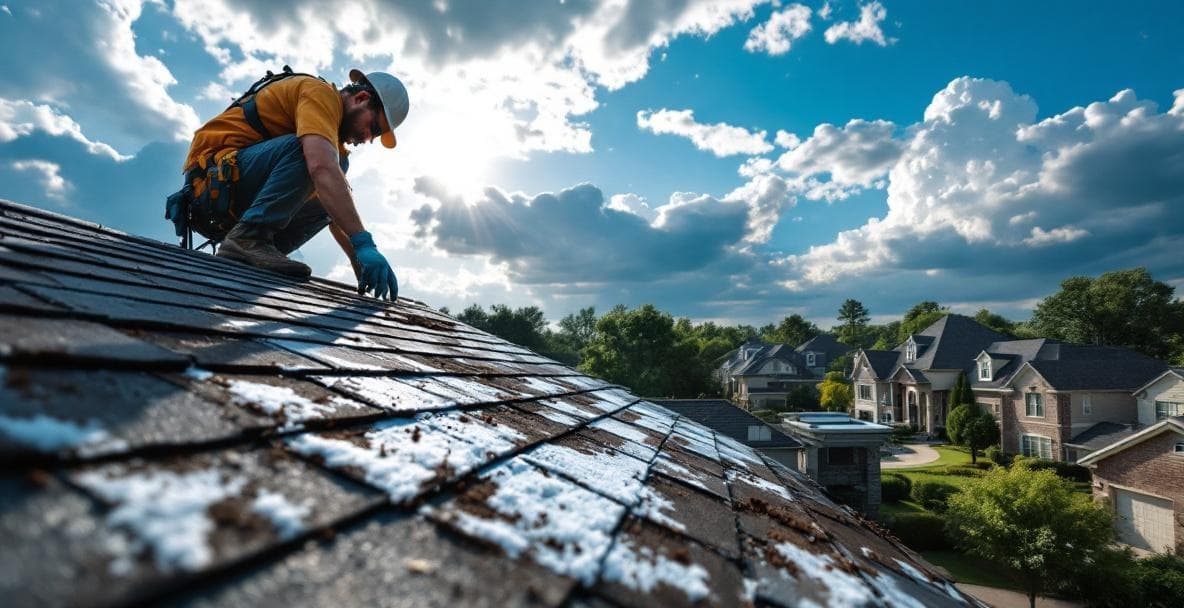
Hiring a Roofer in McKinney, TX: What Homeowners Must Know
If you're reading this after a hailstorm rattled your windows last night, you're not alone — and the decisions you make in the next 72 hours will matter more than most people realize. McKinney homeowners face a roofing environment that's genuinely different from most of the country: severe storms, a legal landscape that makes fraud easy, and HOA rules that can turn a straightforward repair into a months-long headache. This guide covers everything a first-time roof replacement customer needs to know before signing a single document.
Why McKinney Roofs Take a Beating Year-Round
McKinney was one of the fastest-growing cities in the United States throughout the 2010s, which means a large share of its housing stock — the master-planned neighborhoods of Craig Ranch, Trinity Falls, and Westridge among them — is now approaching or passing the 20–25 year shingle replacement window. That timing is unfortunate, because it coincides with hail seasons that seem to grow more intense each spring.
McKinney sits squarely inside North Texas's severe hail corridor. Peak season runs March through June, and the storms that track along the DFW metroplex aren't subtle — golf-ball-sized hail is not a rarity here; it's a recurring event that can total a roof in a single afternoon. After the stone falls, summer takes over, with temperatures that routinely exceed 100°F and UV radiation that dries out and cracks asphalt shingles years ahead of their rated lifespan. Thermal cycling — the daily expansion and contraction of roofing materials in extreme heat — is as damaging over time as any single storm.
Wind is another factor. Straight-line winds and occasional Collin County tornado activity create uplift risk along ridge lines and at roof edges, particularly on the two-story homes common in newer subdivisions. Add sudden heavy rainfall events that overwhelm gutters on tract-built homes, leading to roof deck rot and flashing failures, and you have a climate that makes roofing decisions unusually high-stakes. Winter ice storms are infrequent, but when they arrive, they find whatever weaknesses summer already created — ice damming and shingle cracking on roofs that were already stressed.
If your home was built between 2000 and 2010 in a community like Craig Ranch or Trinity Falls, your roof may be overdue for a professional inspection whether you've seen obvious damage or not.
What Texas Law Says About Roofing Contractors — and Your Deductible
Here's something most McKinney homeowners don't know going in: Texas has no statewide roofing contractor license. Anyone can legally put the word "roofer" on a truck and knock on your door. That makes local verification more critical here than in states that require licensing — because the state isn't doing that screening for you.
What McKinney does require is that contractors register with the City of McKinney's Development Services department and carry both general liability insurance and workers' compensation coverage. That registration number is something you should ask for in writing before any conversation gets serious. If a worker is injured on your roof and the contractor doesn't carry workers' comp, you could be held liable for those costs.
The legal issue that catches the most homeowners off guard is the deductible waiver. After every major hail event, storm-chasing contractors flood Collin County neighborhoods offering to "cover your deductible" as part of the deal. That offer is illegal. Texas House Bill 2102 explicitly prohibits roofing contractors from waiving or rebating a homeowner's insurance deductible. Any contractor who makes that offer is committing insurance fraud — and if you accept, you could share the liability. Legitimate contracts in Texas must include specific HB 2102 disclosure language; its absence is a concrete red flag, not just a yellow one. Knowing this law by name gives you the ability to end a bad conversation immediately.
Permits, Inspections, and HOA Approval: The McKinney Paper Trail
A full roof replacement in McKinney requires a building permit from the city, followed by a Collin County inspection before the project receives final approval. That process exists to protect you — unpermitted roofwork can void your manufacturer's warranty, complicate future insurance claims, and create problems when you sell the house. A contractor who suggests skipping the permit to save time is not saving you anything.
Your contractor should pull the permit, schedule the inspection, and hand you the final approval documentation when the job is done. If a contractor suggests that the permit is "usually the homeowner's job," find someone else.
For homeowners in HOA-governed communities — and that includes a significant portion of McKinney — there's an additional layer. Stonebridge Ranch, one of the largest HOA-governed communities in Collin County, enforces its architectural standards strictly. Homeowners there have faced fines for installing unapproved shingle colors even when replacing a roof damaged by a covered storm event. Craig Ranch and Tucker Hill have similar review requirements. Before you select any roofing material or color, confirm your HOA's approved product list and submit your architectural review request. Even if you're returning to the same color, the HOA may require documentation.
The sequence matters: get HOA approval before signing a contractor agreement, not after.
How to Vet a McKinney Roofer Before You Sign Anything
After the severe hail events that swept the DFW corridor in spring 2023, hundreds of out-of-state roofing crews established temporary operations in Collin County neighborhoods. The Better Business Bureau of Dallas logged a spike in roofing complaints from McKinney-area homeowners that year — most involving companies that had disappeared by the time warranty problems surfaced. A disciplined screening process is the only reliable defense.
Start with the City of McKinney contractor registration. Ask for the number in writing and verify it with the Development Services department — a two-minute call or website check that most homeowners skip. Next, request a certificate of insurance showing current general liability and workers' compensation coverage, then call the insurer directly to confirm it hasn't lapsed. Contractors who delay producing this document or offer excuses are telling you something important.
Ask how long the company has operated specifically in McKinney or Collin County. "Twenty years in roofing" means little if there's no local footprint, no physical address, and no reviews that mention specific McKinney neighborhoods or storms. When you check reviews, look for details — references to Craig Ranch, Eldorado Heights, a specific storm season — because generic five-star reviews with no local context are worth less than they appear.
Get at least three written estimates and compare them line by line. A dramatically low bid often signals cut-rate materials, unlicensed subcontractors, or both. Ask directly whether the crew working on your roof will be company employees or subcontractors, and confirm that subcontractors are covered under the same insurance policy.
Navigating Your Homeowner's Insurance Claim for Roof Damage
McKinney homeowners in zip codes 75070 and 75071 are in some of the most hail-active corridors in North Texas, which means insurance adjusters who cover those areas have seen a lot of claims — and sometimes apply heightened scrutiny to them. Going into the process informed makes a real difference.
File your claim promptly after a storm. Texas law requires insurers to acknowledge a claim within 15 days and to accept or deny it within 15 business days of receiving complete documentation. Before the adjuster visits, get your own independent inspection and a written damage assessment from a roofer you trust. That document gives you something concrete to dispute against a low estimate.
Two documents to watch carefully: the Assignment of Benefits form and your policy's valuation method. An AOB transfers your insurance rights to the contractor, which is legal in Texas but strips you of control over your own claim — do not sign one. Your policy's valuation method — Actual Cash Value versus Replacement Cost Value — determines whether depreciation is deducted from your payout. ACV policies can leave you thousands short of what a full replacement actually costs.
Document all damage with dated photographs before any tarping or temporary repairs are made. And keep this in mind throughout: your contractor works for you. Any contractor who insists on managing all adjuster communication without your involvement is not looking out for your interests.
Choosing the Right Roofing Material for McKinney's Climate
In McKinney's hail and heat environment, roofing material selection is a financial decision as much as an aesthetic one. The most important upgrade most homeowners can make is moving to Class 4 impact-resistant shingles. Several major insurers operating in Collin County — including State Farm and Farmers — offer documented premium discounts of 20–30% on homeowner's policies for homes with qualified IR roofing. In a market where hail damage is a near-certainty over any 10-year period, that discount accelerates the payback on the price premium significantly.
Standard 3-tab asphalt shingles are largely a false economy in this climate. Architectural shingles have become the functional baseline, and in McKinney's combination of hail, UV exposure, and thermal cycling, 3-tab shingles tend to fail well ahead of their rated lifespan. If budget allows, metal roofing — standing seam or metal shingles — offers the best long-term durability against both hail and UV degradation. The upfront cost is higher, but the payback period in McKinney's climate is typically 15–20 years, and metal roofs often outlast two or three asphalt replacements.
Light-colored or reflective shingles can meaningfully reduce attic temperatures during McKinney summers, which lowers cooling loads — but check your HOA's approved color palette before falling in love with a particular product. Underlayment is another place where quality matters: synthetic underlayment outperforms traditional felt in high-temperature, high-humidity post-storm conditions. Finally, read the manufacturer's warranty carefully and confirm it covers hail damage specifically. Some standard warranties exclude impact events — which would make it nearly useless in McKinney.
Red Flags and Scams to Watch for in McKinney After a Storm
Historic Downtown McKinney and Eldorado Heights — neighborhoods with a high proportion of long-term homeowners, including many seniors — are among the areas most frequently targeted by door-to-door roofing solicitors after storm events. The tactics are consistent and worth knowing in advance.
A knock on your door the day after hail is the primary delivery mechanism for storm-chaser fraud. Legitimate local roofers with established businesses and full schedules rarely need to cold-canvass neighborhoods. If someone shows up uninvited with a clipboard and an urgent offer, that's your first data point.
Pressure to sign a contract before your insurance adjuster has visited is a manipulation tactic, not a real deadline. Any offer to waive your deductible is illegal under Texas HB 2102 — and a contractor willing to commit fraud on the front end is not going to hold the line on workmanship or warranty on the back end. Vague contracts that list no specific material manufacturer, product line, or class rating give the contractor legal cover to install whatever is cheapest and most available. Demand specifics in writing.
Large upfront cash deposits — anything above 10–15% before materials are ordered — are a warning sign. And before you trust any business card or truck signage, verify that the address listed is a real, permanent local address, not a P.O. box or an out-of-state location that signals a crew passing through.
Questions to Ask Before You Hire — and What Good Answers Sound Like
McKinney's City of McKinney Development Services department can confirm contractor registration status in minutes. Most homeowners never make that call — and some of them spend months dealing with the consequences. Use this list before you sign anything.
"Are you registered as a contractor with the City of McKinney?" A legitimate contractor provides the registration number without hesitation. Anything slower than that is a problem.
"Will you pull the building permit and schedule the final inspection?" The answer should always be yes. "That's usually the homeowner's job" is the wrong answer.
"Can I see your current certificate of insurance for general liability and workers' comp?" A good contractor emails it the same day. Delays and excuses mean the coverage may not exist or may have lapsed.
"How long have you operated in McKinney or Collin County?" Look for verifiable local history — years in business, named references in local neighborhoods — not a general claim of industry experience with no local footprint.
"What shingle product and class will you install, and can I see the manufacturer spec sheet?" The answer should include a specific product name, a Class 3 or Class 4 impact rating, and a commitment to put those details in writing in the contract.
"Who will be on my roof — your employees or subcontractors?" Either can be acceptable, but subcontractors must be covered under the same insurance policy as the company's own employees. Ask for documentation.
A contractor who handles all of these questions confidently and without pushback has passed a meaningful filter. One who deflects, delays, or gets defensive has told you what you need to know.
Frequently Asked Questions
How much does a roof replacement cost in McKinney, TX?
Most McKinney homeowners pay between $8,000 and $18,000 for a full asphalt shingle roof replacement on a typical single-family home, depending on square footage, pitch, and material class. Upgrading to Class 4 impact-resistant shingles typically adds 10–20% to material costs, but insurance premium discounts from carriers like State Farm and Farmers can offset that over time. Metal roofing runs higher — often $20,000 to $35,000 or more — but carries a significantly longer lifespan in McKinney's climate.
Do roofers in McKinney need a license?
Texas does not require a statewide roofing contractor license, so any individual can legally perform roofing work. However, roofers operating in McKinney must register as a contractor with the City of McKinney and carry general liability and workers' compensation insurance to pull building permits. Always ask for the contractor's city registration number and verify it directly with Development Services.
Does my homeowner's insurance cover hail damage to my roof in Texas?
Most standard Texas homeowner's insurance policies include hail damage coverage, but the payout depends on whether your policy uses Actual Cash Value or Replacement Cost Value. ACV policies deduct depreciation, which can leave you significantly short of full replacement costs. Review your policy before a storm — not after — and understand your deductible, which you are legally required to pay in full.
How do I report a roofing scammer in McKinney or Collin County?
File a complaint with the Texas Attorney General's Consumer Protection Division online at texasattorneygeneral.gov, and report to the Better Business Bureau of Dallas. For contractors who violated Texas HB 2102's deductible-waiver prohibition, the Texas Department of Insurance also accepts complaints. Documenting everything — contracts, texts, photos of the truck and business cards — strengthens your report.
Do I need a permit to replace my roof in McKinney?
Yes. The City of McKinney requires a building permit for full roof replacements, and a Collin County inspection must occur before final project approval. Skipping the permit can void manufacturer warranties, create problems with your homeowner's insurance, and complicate future home sales. Your contractor should pull the permit and manage the inspection process — that responsibility should be written into your contract.
Can a roofer waive my insurance deductible in Texas?
No. Texas House Bill 2102 explicitly makes it illegal for a roofing contractor to waive, absorb, or rebate a homeowner's insurance deductible. Any contractor who offers to cover your deductible is committing insurance fraud, and accepting that offer could expose you to liability as well. Contracts must include HB 2102 disclosure language — its absence is a red flag.
What is the best roofing material for hail in McKinney?
Class 4 impact-resistant shingles offer the best balance of hail protection and cost for most McKinney homeowners, and they qualify for premium discounts from major insurers including State Farm and Farmers. Metal roofing — standing seam or metal shingles — provides superior long-term durability but at a significantly higher upfront cost. Standard 3-tab asphalt shingles are not recommended for McKinney's hail and heat environment.
Do I need HOA approval before replacing my roof in Stonebridge Ranch?
Yes. Stonebridge Ranch's HOA requires architectural review approval before any roofing material or color change, even when replacing a storm-damaged roof. Failing to get approval before the job starts can result in fines and mandatory replacement of non-approved materials. Submit your request — including the specific product name and color — before signing any contractor agreement, and factor the review timeline into your project schedule.